
Interpretation of the "Measures for the Administration of Invasive Alien Species"
On April 22, 2022, the "Measures for the Administration of Invasive Alien Species" were reviewed and approved at the 4th executive meeting of the Ministry of Agriculture and Rural Affairs, and were published with the consent of the Ministry of Natural Resources, the Ministry of Ecology and Environment, and the General Administration of Customs, effective from August 1, 2022.
The "Measures for the Administration of Invasive Alien Species" provide detailed provisions on the classification of alien species and invasive alien species: For the purposes of these Measures, "alien species" refers to species that have no natural distribution within the territory of the People's Republic of China and have been introduced through natural or artificial pathways, including all parts of the species that may survive and reproduce. For the purposes of these Measures, "invasive alien species" refers to alien species that have been introduced and established and pose a threat or hazard to ecosystems, habitats, and species, affecting China's ecological environment and damaging the sustainable development of agriculture, forestry, animal husbandry, and fisheries as well as biodiversity.
Here, the Changfeng Xincun Judicial Office invited lawyers from Shanghai Runyi Law Firm to help everyone further understand this administrative measure through the recent trending social incident involving "alligator gar."
【Trending Incident】Draining the Lake to Catch the "Monster Fish"
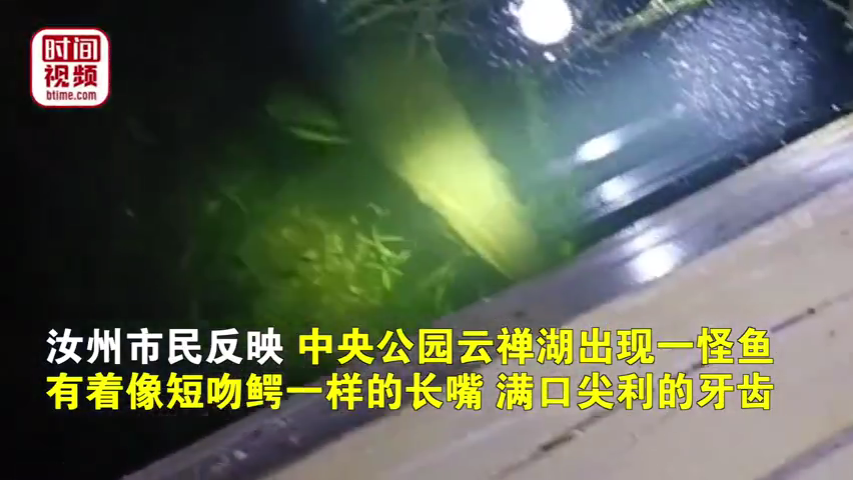
At the end of August 2022, a strange fish called "alligator gar" suddenly attracted public attention. This giant strange fish appeared in multiple provinces including Guangdong, Guangxi, Fujian, Henan, Sichuan, and Jiangsu. In Zhengzhou Ruzhou Central Park, professionals even drained 300,000 cubic meters of water from Yunchan Lake to catch two alligator gar, with tens of millions of netizens watching the capture process through live streaming. What was so special about these two "alligator gar" that warranted such a major operation?
【Species Science】Getting to Know the Alligator Gar
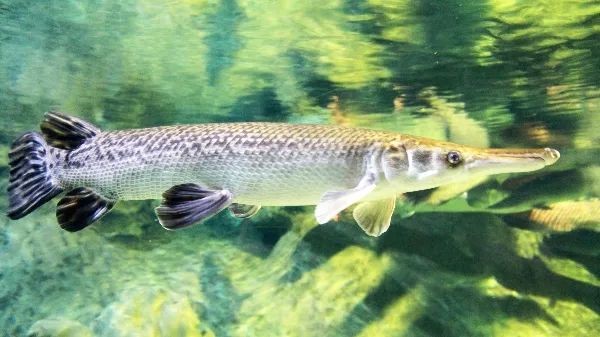
Alligator gar (scientific name: Atractosteus spatula): belongs to the order Lepisosteiformes, family Lepisosteidae, genus Atractosteus. Gar species are native to North or Central America, with ancestors dating back over 100 million years to the Cretaceous period. Adult alligator gar typically measure 1.2 to 1.8 meters in length, and can grow up to 3 meters long, making them the largest among the seven existing gar species.
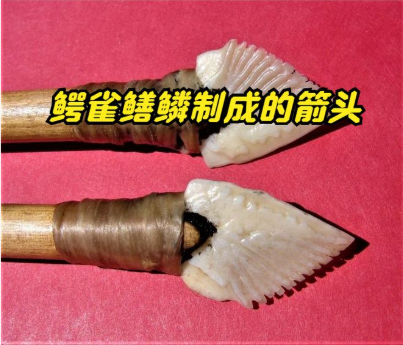
The scales of the alligator gar have evolved over time to become as thick as a coin. This layer of ganoin-covered硬鳞 even makes a kitchen knife wince. The eggs and meat of alligator gar also contain a special toxic protein that protects them from predators. As carnivorous fish, alligator gar eat almost anything. At the same time, alligator gar have extremely strong adaptability; their swim bladder is connected to the dorsal esophagus via a duct, with multiple chambers resembling lungs, and the bladder walls are densely covered with microvessels, allowing them to survive on land for some time.
These combined characteristics have made the alligator gar the apex predator in aquatic environments. Without natural predators to control them, alligator gar can do whatever they want in China's water environments.
Mr. Kong, a staff member from Henan Water Resources Investment Group who participated in the fishing operation at Ruzhou Central Park, stated that during the search, they found that the fish in the lake had almost been eaten up. If left unchecked, the alligator gar might even risk attacking humans near the water area once their food supply was exhausted. A boy in Taizhou, Jiangsu was once injured by an alligator gar in a community landscape pool, with three fingers bitten. Such a highly dangerous species deserves attention and vigilance.
【Incident Warning】Hazards of Alien Species
Both the meat and eggs of alligator gar are toxic, so they are not suitable for consumption. However, the alligator gar's peculiar appearance and fierce habits have earned them a place in the ornamental fish market. Around the 1990s, alligator gar were introduced as ornamental fish, and gradually became a common fixture in the domestic ornamental fish market. However, alligator gar eat too much, and combined with their appetite-matching size, many owners find them too expensive to keep and choose to "release" them into the wild. The already formidable alligator gar become even more unrestrained after escaping from fish tanks,肆意捕食当地水生生物。
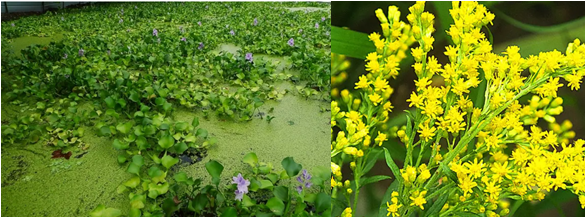
Incidents similar to the alligator gar hazard are not uncommon. In recent years, the number of alien species invasions in China has shown an upward trend, making China one of the countries most severely affected by such hazards in the world. In the early 20th century, China introduced water hyacinth from South America as an ornamental plant and fodder. However, due to the lack of relevant prevention and control mechanisms, water hyacinth proliferated extensively, causing aquatic organisms to die from oxygen deprivation. "Canadian Fleabane" is an ornamental plant that was introduced from North America to Shanghai and other places in China in the 1930s, and later released into the wild. It has extremely strong reproductive capabilities and rapid space-occupying ability, suppressing the growth of local plants and disrupting the ecological balance of vegetation in invaded areas. These are typical cases of invasive alien species.
These incidents have made people aware of the dangers of alien species, and corresponding laws and regulations have been formulated to prevent and control these organisms. Since 2003, China has issued four batches of the "List of Invasive Alien Species in China." In addition to water hyacinth and fleabane, species such as apple snail, American bullfrog, and red swamp crayfish are also on the list.
【Legal Interpretation】
From Post-Event Remediation to Pre-Event Prevention, the "Measures for the Administration of Invasive Alien Species" Strengthen Biosecurity Defense
On August 31, 2022, Gu Dangen, a scientist specializing in alien species invasion prevention and control at the National Technical System for Major Freshwater Fish Industries, pointed out: "When the "List of Key National Alien Species for Management (First Batch)" was published and implemented in 2012, there was no evidence that alligator gar could reproduce in the wild, and the numbers were relatively small at that time. However, current data has proven that alligator gar can reproduce in the wild. The customs and agricultural and rural affairs departments have already taken action to prevent further introduction of these species." Therefore, alligator gar are currently only alien species and do not fall under the "invasive alien species" as defined by Chinese law, and their control is not as strict as that of other invasive alien species. In fact, until recently, people could directly purchase alligator gar online. However, the actual hazards brought by alligator gar introduction exist. For alien species like alligator gar, are we only able to passively defend, even to the extent of draining a body of water to capture them, or is there a way to sound an early warning?
To effectively strengthen the management of invasive alien species, the "Measures for the Administration of Invasive Alien Species" have also made provisions in three aspects: source prevention, monitoring and early warning of invasive alien species, and implementation of treatment and restoration.
1、Source Prevention
Articles 10 through 14 of the "Measures for the Administration of Invasive Alien Species" set clear requirements for strengthening source prevention in three aspects.
First, standardize species introduction management. Where it is necessary to introduce alien species such as crop and forestry seeds and seedlings, aquatic seedlings, etc., from outside China for special needs such as variety breeding, import approval and quarantine approval shall be obtained in accordance with the approval authority. For species introduced for the first time, the introducing entity shall conduct a risk analysis and submit a risk assessment report to the approval department.
Second, strengthen port prevention and control. Customs shall strengthen port prevention and control, crack down on illegal activities such as illegal introduction, carrying, mailing, and smuggling of alien species, and legally dispose of invasive alien species discovered and alien species assessed to have invasion risks.
Third, strengthen domestic quarantine. The agricultural and rural affairs and forestry and grassland authorities of local people's governments at or above the county level shall, in accordance with the law, strengthen quarantine supervision over the inter-regional transportation of crop and forestry seeds and seedlings, plant products, aquatic seedlings, etc., to prevent the spread of invasive alien species.
The invasion pathways of alien species mainly include artificial introduction and natural invasion. Artificial introduction includes intentional introduction and unintentional introduction. Among these, intentional introduction includes introduction for purposes such as ornamental use, while unintentional introduction refers to inadvertent entry through trade transportation and travelers. Natural invasion refers to invasion through air currents, water flow, or transmission by insects and birds. The three requirements proposed for source prevention in the "Measures for the Administration of Invasive Alien Species" respectively correspond to intentional introduction, unintentional introduction, and natural invasion, comprehensively blocking the invasion of alien species into China.
2、Monitoring and Early Warning
To strengthen monitoring and early warning of invasive alien species and timely grasp their status, Articles 15 through 19 of the "Measures for the Administration of Invasive Alien Species" make three aspects of provisions.
First, carry out investigation and monitoring. Establish a census and monitoring system for invasive alien species, organize a national census every ten years, build a national invasive alien species monitoring network, and conduct normalized monitoring.
Second, issue early warnings and forecasts. The agricultural and rural affairs, natural resources (ocean), ecological environment, forestry and grassland authorities of local people's governments at or above the provincial level, as well as customs, shall strengthen monitoring information sharing, analyze and assess the occurrence and spread trends of invasive alien species, promptly issue early warnings and forecasts, and guide prevention and control efforts.
Third, standardize information release. The overall situation of national invasive alien species shall be released by the Ministry of Agriculture and Rural Affairs in consultation with relevant departments. The occurrence of invasive alien species in relevant fields shall be released by the State Council's relevant departments within their authority. Provincial agricultural and rural affairs authorities shall, in consultation with relevant departments, uniformly release the situation of invasive alien species in their respective administrative regions.
Before the promulgation of the "Measures for the Administration of Invasive Alien Species," there were certain gaps in China regarding real-time monitoring of invasive alien species. When the hazards caused by invasive alien species were perceived by people, these species often had already accumulated certain numbers. Governing them at this point often faced problems such as high costs and difficulty in eradication. The "Measures for the Administration of Invasive Alien Species" have made provisions for the entire process from investigation and monitoring, early warning release, to information release. With the effectiveness of the "Measures for the Administration of Invasive Alien Species," China has already initiated the census work on invasive alien species, thus nipping the species invasion problem in the bud and achieving "early treatment, small-scale treatment, complete treatment, and good treatment" of invasive species.
3、Implementation of Treatment and Restoration
To vigorously promote the treatment and restoration of invasive alien species, Articles 20 through 23 of the "Measures for the Administration of Invasive Alien Species" stipulate that the Ministry of Agriculture and Rural Affairs, the Ministry of Natural Resources, the Ministry of Ecology and Environment, and the National Forestry and Grassland Administration shall, in accordance with their responsibilities, research and formulate prevention and control strategies and measures for invasive alien species, and all localities shall formulate prevention and control plans based on actual conditions and implement prevention and control measures.
For the treatment of invasive alien plants, measures such as manual removal, mechanical eradication, application of green pesticides, and release of biological natural enemies may be adopted during key growth periods such as seedling stage, flowering period, or fruiting period depending on actual circumstances.
For the treatment of invasive alien pests and diseases, measures such as selecting pest-resistant varieties, seedling pretreatment, physical removal, chemical elimination, and biological prevention and control shall be adopted to effectively prevent and stop the spread of pests and diseases.
For the treatment of invasive alien aquatic animals, targeted fishing and other measures shall be adopted to prevent their further spread and harm. In addition, the "Measures for the Administration of Invasive Alien Species" require that ecosystem restoration be carried out in areas where invasive alien species occur by adopting measures such as planting native plants and releasing local species according to local conditions.
【Lawyer's Reminder】
Although "invasive alien species" and "alien species" are two different concepts. Not all alien species are invasive species. Whether they belong to invasive species requires long-term scientific assessment. However, all alien species, regardless of whether they are listed, are subject to strict management regulations. According to the relevant provisions of the "Measures for the Administration of Invasive Alien Species" and the "Biosecurity Law," no units or individuals shall, without approval, introduce, release, or discard alien species; for those who violate the law, in addition to being ordered to capture or retrieve the alien species within a time limit, they shall also pay a fine of 10,000 to 50,000 yuan. In addition, the 11th Amendment to the Criminal Law added the crime of illegal introduction, release, or discarding of invasive alien species. Acts of illegally introducing, releasing, or discarding invasive alien species in violation of state regulations shall be investigated for corresponding criminal liability.
Currently, some ornamental fish merchants, to increase sales of alligator gar, tell customers that purchasing this species is not illegal, and there will be no problem as long as they do not privately release it. However, this claim of "legal purchase, illegal release" lacks legal basis. Although current relevant regulations do not explicitly prohibit the trading of alien species, without being able to provide import permits or other legal proof, the trading of alien species is highly likely to be identified as an act of introducing alien species, and the owner and seller may need to bear corresponding legal responsibility.
To sum up, when residents see "exotic creatures" at flower and bird markets, if they cannot determine whether they belong to alien species, they should avoid purchasing to avoid bearing corresponding legal responsibility. At the same time, if residents have already purchased alligator gar or other alien species and cannot continue to keep them, they should never randomly release them. They can entrust universities, research institutions, or the Shanghai Municipal Agriculture and Rural Affairs Committee for handling. If residents discover alligator gar in parks, rivers, lakes, or other water areas, they should promptly report to the Shanghai Municipal Agriculture and Rural Affairs Committee or other competent authorities for fishing and removal, and carry out harmless treatment. For "exotic pets" of unknown origin, we hope residents will fully understand, enhance awareness, remain cautious, and never introduce or arbitrarily discard alien species, so as to jointly protect the ecological environment in our domain.
Appendix: Shanghai Municipal Agriculture and Rural Affairs Committee Information
Contact Number:23111111
Address:No. 100 Dagu Road, Shanghai
Working Hours:9:00—18:00
【Summary of Relevant Legal Provisions】
Article 344-1 of the Criminal Law of the People's Republic of China:
Whoever, in violation of state regulations, illegally introduces, releases, or discards invasive alien species, if the circumstances are serious, shall be sentenced to fixed-term imprisonment of not more than three years or criminal detention, and shall also, or shall only, be fined.
Article 25 of the "Measures for the Administration of Invasive Alien Species":
Those who, in violation of the provisions of these Measures, without approval, introduce, release, or discard alien species without approval shall be penalized in accordance with Article 81 of the "Biosecurity Law of the People's Republic of China." Those suspected of a crime shall be transferred to judicial authorities for investigation of criminal liability in accordance with the law.
"Biosecurity Law of the People's Republic of China"
Article 81: Whoever, in violation of the provisions of this Law, introduces alien species without approval shall be ordered by the relevant authorities of the local people's government at or above the county level to confiscate the introduced alien species, and shall also be fined not less than 50,000 yuan but not more than 250,000 yuan.
Whoever, in violation of the provisions of this Law, releases or discards alien species without approval shall be ordered by the relevant authorities of the local people's government at or above the county level to capture or retrieve the released or discarded alien species within a time limit, and shall be fined not less than 10,000 yuan but not more than 50,000 yuan.
Article 82: Whoever, in violation of the provisions of this Law, constitutes a crime shall be investigated for criminal liability in accordance with the law; if causing personal injury, property damage, or other damage, shall bear civil liability in accordance with the law.
Shanghai Runyi Law Firm
Lawyer Ouyang ChenpengIntern Wu RenjieContributors