
Ministry of Commerce Gives Green Light to Equity Contribution by Foreign-Invested Enterprises
The Ministry of Commerce's "Interim Provisions on Equity Contribution Involving Foreign-Invested Enterprises" ("the Provisions") took effect on October 22, 2012. These Provisions provide operational guidelines for equity contribution by foreign-invested enterprises.
I. Forms of Equity Investment by Foreign-Invested Enterprises
The Provisions clarify that domestic and foreign investors ("equity contributors") may use their equity in Chinese domestic enterprises ("equity enterprises") as contributions to establish and change foreign-invested enterprises ("invested enterprises"). The specific forms of contribution are shown in the following figure:
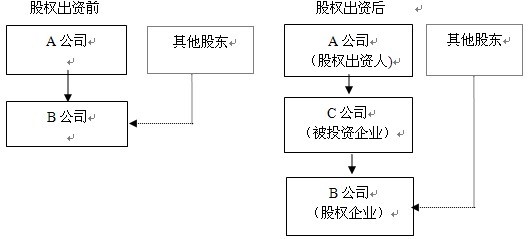
The forms of equity investment by foreign-invested enterprises regulated by the Provisions include: 1. Establishing a foreign-invested enterprise in the form of a newly established company; 2. Increasing capital to change a non-foreign-invested enterprise into a foreign-invested enterprise; 3. Increasing capital to cause changes in the equity of a foreign-invested enterprise.
II. Equity of Real Estate Enterprises and Others Cannot Be Used for Contribution
The Provisions impose restrictions on contributed equity, clearly stating that equity such as equity of enterprises with unpaid registered capital, equity that has been pledged or frozen, equity that the articles of association specify cannot be transferred, or equity of foreign-invested enterprises that have not participated in or passed the previous year's joint annual inspection of foreign-invested enterprises, cannot be used for contribution. At the same time, the Provisions particularly specify that "equity of real estate enterprises, foreign-invested investment companies, and foreign-invested venture capital (equity) investment enterprises" cannot be used for contribution.
To prevent foreign investors from circumventing foreign investment management through equity contribution, the Provisions require that after equity contribution, the invested enterprise and the equity enterprise and their directly or indirectly holding enterprises shall comply with the national guiding catalog for foreign investment industries and related regulations.
III. Contributed Equity Must Be Evaluated and Cannot Exceed 70% of the Registered Capital of the Invested Enterprise
In accordance with the Provisions, equity used for contribution shall be evaluated by a domestic evaluation institution established according to law, and the equity valuation shall be determined through negotiation on this basis. The amount of equity contribution shall not exceed the equity evaluation value. In addition, the combined proportion of equity contribution and other non-monetary property valuation contributions to the registered capital of the invested enterprise shall not exceed 70%.
IV. Issues Pending Further Clarification After the Implementation of the Provisions
The introduction of the Provisions makes equity contribution by foreign-invested enterprises possible, but the following issues urgently need clarification:
1. Whether equity contributors using equity of the equity enterprise for contribution need consent from other shareholders
In practice, the forms of companies are mostly limited liability companies combining capital association and personnel association. According to the "Company Law," shareholders of limited liability companies transferring equity to outsiders need other shareholders to waive their preemptive rights. However, according to the Provisions, when an equity contributor uses equity of the equity enterprise for contribution, they can transfer the equity of the equity enterprise to the name of the invested enterprise without needing consent from other shareholders of the equity enterprise.
Assuming the invested enterprise is a company 100% controlled by the equity contributor, the equity contributor can inject the equity of the equity enterprise into the invested enterprise, and then achieve the effect of actually transferring the equity of the equity enterprise by transferring the equity of the invested enterprise, circumventing the restrictive legal provisions requiring other shareholders to waive preemptive rights for external transfer of equity of the equity enterprise.
2. Whether premium arising from equity contribution valuation requires payment of income tax.
The Provisions do not clarify which tax management regulations should apply to equity contribution. If the valuation amount of shares used for contribution by the equity contributor or the equity contribution amount is higher than the original price, whether the premium portion requires payment of income tax is not clarified in the Provisions. It is believed that with the development of practical operations, relevant implementation rules will be further clarified, and it is expected that the Provisions can bring more convenience for foreign investment development in China.